Warts are common skin growths, but their location, size and tendency to spread can make them uncomfortable or frustrating. Some disappear naturally over time, while others remain for months, multiply or repeatedly get irritated by clothing, shaving and everyday activity. If you are considering a Warts Removal Treatment Clinic in Aundh, understanding why warts develop and how dermatologists assess them can help you make a more informed decision.
What Causes Warts?
Most common warts are associated with certain types of human papillomavirus, commonly called HPV. The virus can enter the outer layer of the skin through tiny cuts or damaged areas and cause excess skin growth.
Warts may develop on the hands, fingers, feet, face and other areas. Their appearance varies depending on their type and location.
A wart may look:
- Rough and raised
- Flat and relatively smooth
- Small and grainy
- Flesh-coloured, brownish or greyish
- Isolated or grouped with several similar growths
Not every bump that looks like a wart actually is one. Skin tags, corns and certain other skin lesions can sometimes be mistaken for warts, which is one reason professional examination is useful before attempting removal.
When Does a Wart Need Attention?
A small wart that causes no problems may not always require immediate treatment. However, dermatological evaluation becomes more relevant when a growth is painful, repeatedly injured, increasing in number or creating cosmetic concerns.
It is particularly important to seek medical assessment if a growth changes noticeably, bleeds without a clear reason or has an uncertain diagnosis.
People with diabetes, reduced immunity or circulation problems should also be cautious about attempting home removal, particularly for lesions on the feet.
How Can Warts Be Removed?
Treatment depends on the wart's type, size, number and anatomical location.
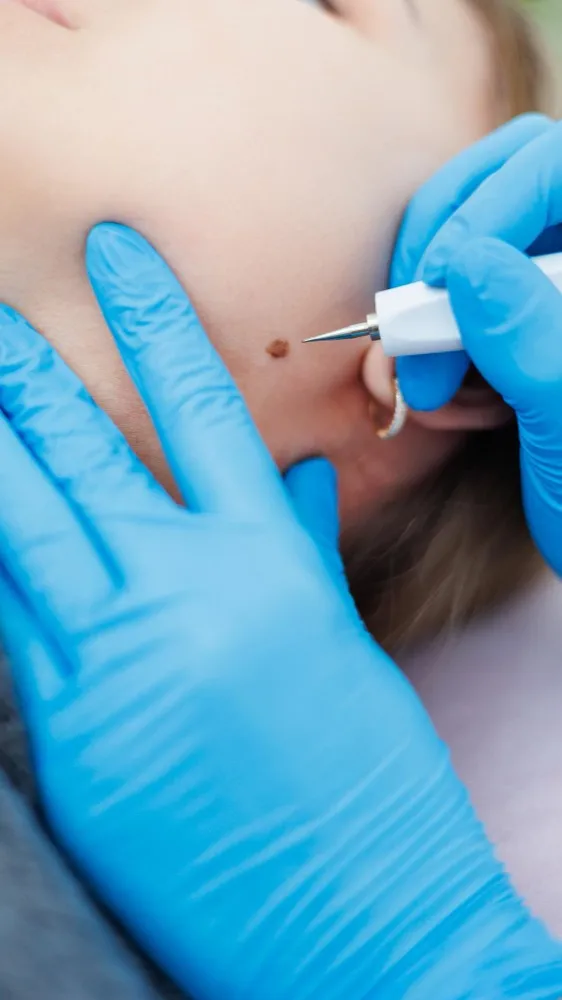
Dermatologists may consider options such as cryotherapy, electrosurgery, radiofrequency-based procedures, chemical treatment or other appropriate techniques. Some warts require repeated sessions rather than disappearing after a single procedure.
The best approach is therefore not simply the fastest removal technique. It is the method that is appropriate for the particular lesion and surrounding skin.
Why Home Cutting and Picking Can Cause Problems
Trying to cut, burn or repeatedly pick a wart at home can damage healthy skin. It may cause bleeding, irritation, infection or scarring.
Another problem is uncertainty about diagnosis. Treating an unidentified skin growth as a wart can delay proper evaluation of a different condition.
Over-the-counter products are available for certain common warts, but they are not suitable for every body area or every patient. Products intended for hands or feet, for example, should not automatically be used on delicate facial or genital skin.
What Happens During a Dermatology Consultation?
A dermatologist will usually examine the growth and consider its location, duration, appearance and previous treatments.
Questions may include whether the lesion has changed, whether similar growths are appearing elsewhere and whether it causes itching, bleeding or pain.
At Dr Rajshree Patil-Best Dermatologist, patients seeking wart assessment can be evaluated before a suitable management approach is selected. This distinction matters because treatment should begin with identifying what the growth actually is rather than proceeding directly to removal.
Caring for the Skin After Removal
Aftercare varies according to the procedure performed. The treated area may temporarily become red, tender, crusted or mildly swollen.
Patients may be advised to keep the area clean, avoid unnecessary picking and follow any wound-care instructions provided by the dermatologist. Sun protection may also be important for exposed areas while the skin heals.
For residents of Aundh and nearby areas of Pune, Maharashtra, the practical goal of wart treatment should be accurate assessment followed by an appropriate removal method. A wart may seem like a minor skin problem, but professional evaluation can help determine whether treatment is necessary and how it can be performed while protecting the surrounding skin.
Keywords