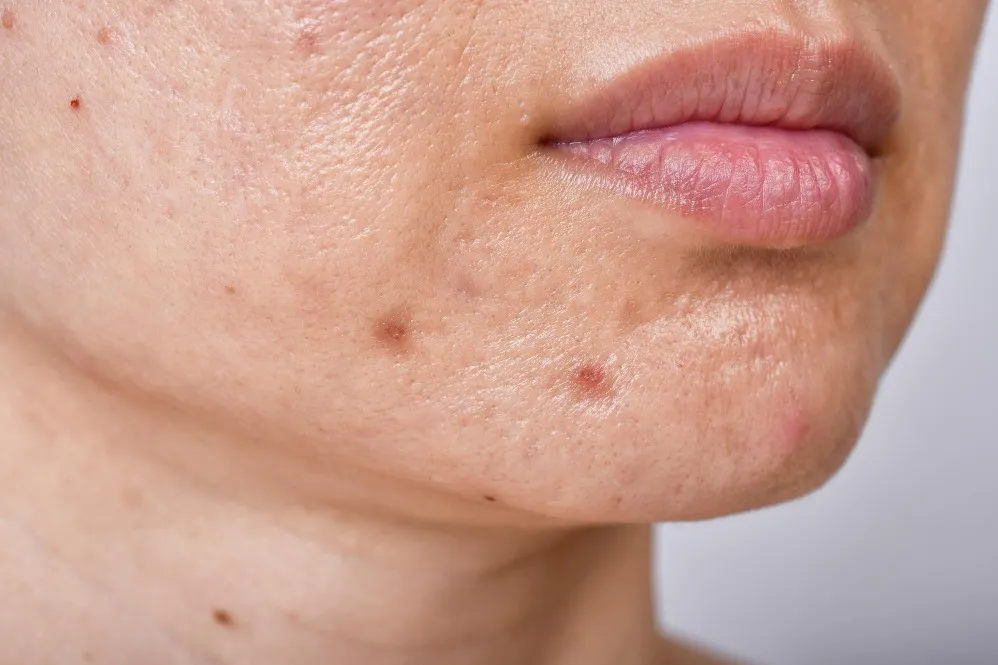
Acne may settle, but the marks it leaves behind can persist for years. Some people have flat dark marks, while others develop depressions, uneven texture, or raised scars.
This distinction is essential when looking for Acne Scar Treatment in Aundh, because different scar types may require different procedures.
First Determine Whether It Is Actually a Scar
Post-acne pigmentation and acne scarring are not the same.
A flat brown or reddish mark may represent a colour change after inflammation. A true atrophic scar involves a structural depression in the skin.
Treating both identically may lead to disappointing results.
A dermatologist should therefore identify whether the main concern is:
- Pigmentation
- Redness
- Depressed scarring
- Raised scarring
- Active acne
- A combination of these
Why Scar Shape Matters
Depressed acne scars are commonly described according to their appearance.
Some are narrow and deep. Others have sharper edges or create broader undulating depressions.
The depth and architecture influence treatment selection.
A procedure effective for superficial texture may not adequately address a deep tethered scar.
Combination Treatment Is Often Considered
People frequently search for the best acne scar procedure.
In practice, mixed scar patterns are common. A dermatologist may therefore consider different techniques for different scar characteristics.
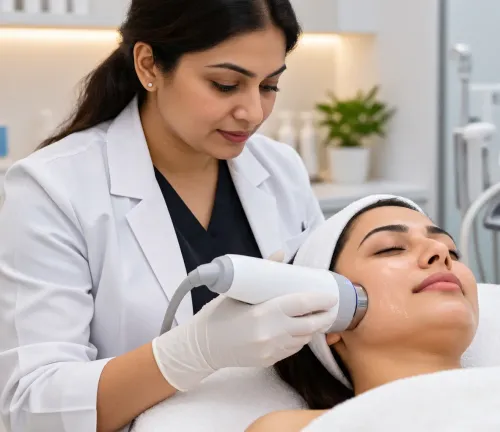
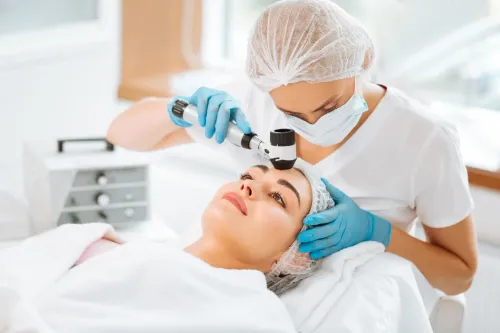
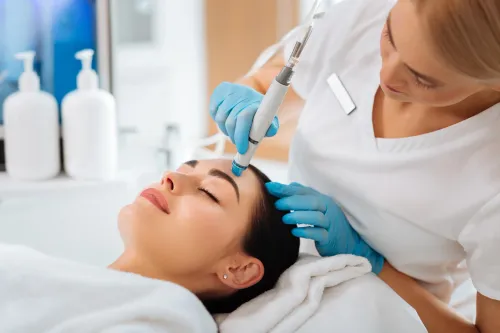
Depending on assessment, treatment approaches may include resurfacing technologies, microneedling-based procedures, scar-release techniques, selected peels, or other interventions.
The exact plan should be individualised.
Active Acne Should Not Be Ignored
Treating scars while uncontrolled inflammatory acne continues can be frustrating because new lesions may produce new marks and scars.
For some patients, controlling active acne becomes an important first stage.
This does not necessarily mean scar treatment must always wait completely, but acne activity should be included in the overall plan.
Ask About Downtime Before Choosing a Procedure
Procedures vary considerably in recovery.
Before proceeding, ask about:
- Expected redness
- Swelling
- Peeling or crusting
- Sun precautions
- When makeup can be resumed
- When work or social activities can be resumed
- Post-treatment skincare
Someone who cannot accommodate several days of visible recovery may require a different treatment schedule from someone comfortable with more downtime.
Be Cautious With Before-and-After Photographs
Photographs can help illustrate possible outcomes, but lighting, camera angle, makeup, and image processing can dramatically affect how scars appear.
They should not be treated as a guarantee of an identical result.
Ask what improvement is realistic for your specific scar pattern.
Complete Scar Erasure Is Not a Sensible Promise
Acne scar treatment usually aims for improvement rather than perfect restoration of completely unscarred skin.
The degree of change depends on scar type, severity, skin response, number of sessions, treatment method, and healing.
A provider who discusses limitations openly is generally giving more useful information than one promising flawless skin.
Checklist Before Starting Treatment
Before selecting a treatment plan, confirm:
- Your acne scar type has been assessed.
- Active acne has been considered.
- The recommended procedure matches the scar pattern.
- Expected improvement has been discussed.
- Downtime is clear.
- Possible complications have been explained.
- Post-procedure care is provided.
- Multiple sessions have been discussed where relevant.
At Dr Rajshree Patil's dermatology and aesthetic practice, acne scars can be evaluated according to their type and severity before treatment options are planned.
For people in Aundh, provider selection should therefore focus less on finding one fashionable scar treatment and more on finding a clinically appropriate strategy for the actual scars present.
Keywords